google.com, pub-6370463716499017, DIRECT, f08c47fec0942fa0 AA AlfaBloggers Best Bloggers Team Of Asia

Wednesday, 22 January 2025

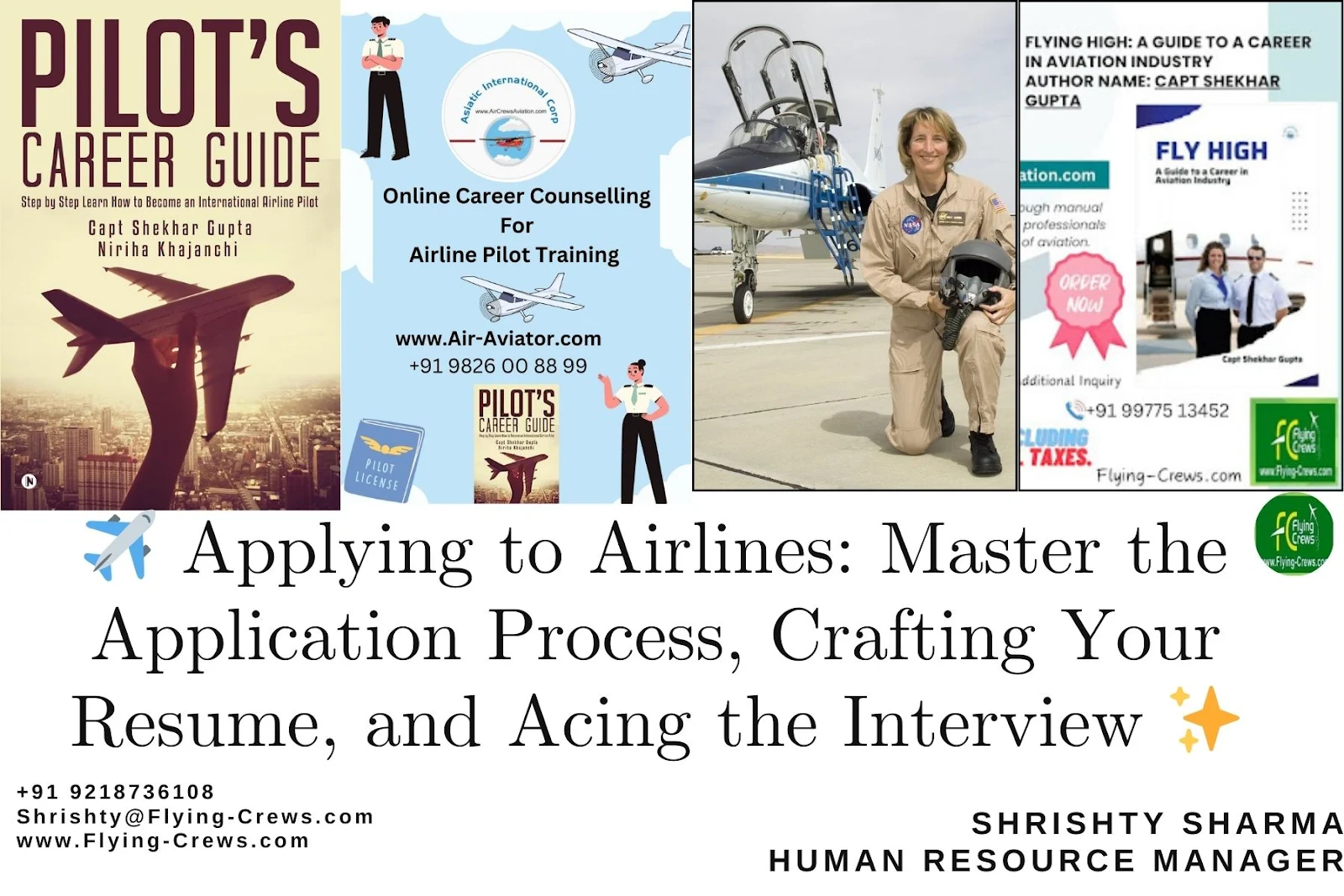
Applying to Airlines: Master the Application Process, Crafting Your Resume, and Acing the Interview


✈️ Applying to Airlines: Master the Application Process, Crafting Your Resume, and Acing the Interview ✨


A career in the Airline Industry promises excitement, travel, and the opportunity to connect with people worldwide. Whether you’re aspiring to be a cabin crew member, a Pilot, or part of the ground staff, the journey starts with a well-planned application. Here’s your guide to navigating the Airline application process, writing a standout resume, and nailing your Interview like a pro!


📋 Understanding the Airline Application Process

  1. 🔍 Research the Airline

✨ Learn about the Airline's history, mission, and values.

🖥️ Check their career page or Job boards for open positions.

✅ Understand specific requirements (e.g., height, language proficiency, or technical certifications).

  1. 📤 Application Submission

🖥️ Submit applications online with all required documents (resume, certificates, passport, and photo).

🖊️ Ensure your personal and Professional details are accurate and up-to-date.

  1. 📈 Assessment Stages

💻 Online Tests: Assess language Skills, numerical reasoning, and situational judgment.

🤝 Assessment Day: Engage in group discussions, role-playing, and aptitude tests.

👩‍⚖️ Final Interview: Showcase your Skills, Experience, and personality during a one-on-one or panel Interview.


📄 Resume Writing Tips for Airline Jobs

  1. 🎯 Tailor Your Resume

💼 Highlight relevant Skills like customer service, communication, and teamwork.

🔑 Use keywords from the Job description to match the Airline's expectations.

  1. 📝 Professional Format

📑 Keep your resume clean and simple with clear headings and bullet points.

🖋️ Include sections for contact info, summary, Skills, Experience, education, and certifications.

  1. 🏆 Showcase Achievements

📊 Quantify results (e.g., "Enhanced customer satisfaction by 15% through personalized service").

🏅 Highlight awards, recognitions, or significant contributions to past roles.

  1. 🎓 Additional Certifications

🛡️ Mention certifications like First Aid, CPR, or language proficiency—these add immense value!


💡 Interview Tips for Airline Jobs

  1. 📚 Prepare Thoroughly

💬 Practice common questions like “Why do you want to work for us?” or “What makes you a good fit for this role?”

🔗 Research the Airline’s history, fleet, and services to show genuine interest.

  1. 👔 Dress Professionally

👗 Opt for formal attire that aligns with the Airline’s standards. Neat grooming is essential!

  1. 💪 Confidence is Key

🗣️ Speak clearly and confidently. Maintain eye contact and use positive body language.

😊 Stay calm and composed even under pressure—Airlines value poise.

  1. 👂 Active Listening

🤝 Pay attention to questions and respond thoughtfully.

📝 Clarify if needed and avoid interrupting.


🌟

Applying to Airlines is an exciting journey, but it requires preparation, attention to detail, and a positive attitude. 🛫 With a tailored resume, thorough Research, and polished Interview Skills, you’re ready to soar into your dream role in the aviation industry! 🌍

Good luck with your application, and see you in the skies! 🛩️


Tuesday, 21 January 2025

Difference Between a Virtual Assistant VA and an Executive Assistant EA


Difference Between a Virtual Assistant (VA) and an Executive Assistant (EA)


In today's fast-paced work environment, both Virtual Assistants and Executive Assistants play vital roles in ensuring business efficiency, While they share some overlapping duties, their work environments, skill sets, and the scope of responsibilities differ significantly. Here’s an in-depth look at the differences between the two roles.


1. Work Environment


Virtual Assistant:

A VA works remotely, often as a freelancer or contractor. They may serve multiple clients at once and use digital tools to manage tasks, communicate, and collaborate. Their flexibility allows businesses to scale support without the need for physical office space.


Executive Assistant:

An EA typically works on-site or in close proximity to the executive they support. They are embedded within the company structure and are often considered part of the leadership team. This proximity allows them to manage face-to-face interactions, oversee physical office logistics, and act as the executive’s right hand.


2. Scope of Responsibilities


Virtual Assistant:

A VA handles a variety of administrative tasks such as email management, scheduling, data entry, social media management, and customer service. They may also specialize in areas like content creation, graphic design, or digital marketing, depending on their expertise.


Executive Assistant:

An EA’s role is more strategic and personalized. They are responsible for managing the executive’s calendar, organizing high-level meetings, preparing reports, coordinating with stakeholders, and maintaining confidentiality on sensitive matters. Their tasks are often tailored to the specific needs of the executive and the organization.


3. Skills and Expertise


Virtual Assistant:

VAs need excellent time management, organizational, and communication skills. Proficiency in remote work tools like project management software (e.g., Trello, Asana), communication platforms (e.g., Slack, Zoom), and productivity apps is essential. Their expertise often spans across multiple industries, making them versatile.


Executive Assistant:

EAs require advanced organizational skills, discretion, and the ability to anticipate an executive’s needs. They must have exceptional interpersonal skills to interact with stakeholders and represent the executive professionally. Proficiency in office management software and corporate communication is also critical.


4. Employment Status


Virtual Assistant:

Most VAs are independent contractors or freelancers who work for multiple clients. They are responsible for their taxes, benefits, and work schedules. This setup offers businesses flexibility and cost-effectiveness.


Executive Assistant:

EAs are generally full-time employees with a fixed salary, benefits, and company-provided resources. Their employment status provides them with job security and deep integration into the organization.


5. Level of Autonomy


Virtual Assistant:

VAs often operate independently, completing assigned tasks without constant supervision. Their ability to self-manage is a key factor in their success.


Executive Assistant:

EAs work closely with their executives, often requiring constant communication and collaboration. Their role is less autonomous as they align their work closely with the executive’s goals and priorities.


6. Cost and Accessibility


Virtual Assistant:

Hiring a VA is often more cost-effective for businesses, as they are paid on an hourly or per-project basis. This makes them accessible to startups and small businesses looking for scalable support.


Executive Assistant:

EAs are typically more expensive to employ due to their full-time status and specialized skills. Their value lies in the strategic partnership they offer to high-level executives.


Which One Should You Choose?


The decision between hiring a VA or an EA depends on the business’s needs:


  • Opt for a Virtual Assistant if you require flexible, task-based support and want to save on costs.


  • Choose an Executive Assistant if you need a dedicated professional to manage complex tasks, build strategic partnerships, and act as an integral part of your leadership team.


Both roles are indispensable in their own right, offering unique benefits tailored to different organizational needs.


Eso-Biachi Naomi

Virtual Assistant

Asiatic International Corp

naomi.flyingcrews@gmail.com

naomibiachi@gmail.com

https://www.flying-crews.com

LinkedIn: 

https://www.linkedin.com/in/naomi-eso-biachi

Linktree: https://linktr.ee/naomibiachi

Vcard: https://linko.page/naomi1234

FB: https://www.facebook.com/profile.php?id=61570358309697

YouTube: 

https://www.youtube.com/aerosoftcorp

EMAILS: 

shrishty@flying-crews.com

shekharaerosoftcoin@gmail.com


Monday, 20 January 2025

Saif Ali Khan Faces Unexpected Attack: The Price of Fame and Safety Concerns for Celebrities

 Saif Ali Khan Faces Unexpected Attack: The Price of Fame and Safety Concerns for Celebrities 🌟


In a startling turn of events, Bollywood superstar Saif Ali Khan reportedly faced an attack that has left his fans and the entertainment industry shaken. 📰 Known for his stellar acting career and royal lineage, Saif’s safety scare is a stark reminder of the vulnerabilities faced by celebrities. This incident isn’t an isolated case; history is rife with similar incidents where public figures have fallen victim to attacks due to their fame.

This article delves into the details of Saif’s ordeal, recounts similar incidents involving other celebrities, and highlights the urgent need for improved security protocols for high-profile individuals. 🚨


The Incident: A Glimpse into Celebrity Vulnerabilities

According to reports, Saif Ali Khan was targeted during a public engagement. Whether it was a fan’s obsession, a premeditated act, or simply a chaotic situation spiraling out of control, the incident underscores the unique challenges that come with celebrity status. While Saif escaped unharmed, the attack has left fans wondering: How safe are our favorite stars?


Notable Similar Incidents: When Fame Turns Dangerous

1. Shah Rukh Khan’s Unruly Fan Encounter

Bollywood’s King Khan, Shah Rukh Khan, faced an unnerving situation when an overly enthusiastic fan breached security during a public event in 2016. The fan’s attempts to get closer turned physical, causing chaos. Although Shah Rukh maintained his composure, the incident highlighted the risks celebrities face from obsessive fans.

2. Salman Khan’s Death Threats

Salman Khan has been no stranger to danger. In 2022, he received death threats allegedly linked to the Lawrence Bishnoi gang. Enhanced security measures were immediately implemented for the actor, emphasizing how real the dangers can be, even for someone with his level of fame.

3. John Lennon’s Tragic End

The music industry suffered a tremendous loss when The Beatles’ John Lennon was shot dead outside his New York apartment in 1980 by a fan, Mark David Chapman. The incident remains one of the most harrowing reminders of how fame can attract dangerous individuals.

4. Kim Kardashian’s Paris Robbery

Reality TV star Kim Kardashian was the victim of a horrifying robbery in Paris in 2016. Armed intruders broke into her hotel room, tied her up, and stole millions of dollars worth of jewelry. The incident shook the entertainment world and led many celebrities to rethink their security arrangements.

5. Taylor Swift’s Stalking Incidents

Taylor Swift has dealt with several stalking incidents over the years. In 2018, a stalker broke into her home in New York City, and in 2022, another man was arrested for attempting to trespass. Swift has since invested heavily in advanced security measures.

6. Lady Gaga’s Dog Walker Shooting

In 2021, Lady Gaga’s dog walker was shot during a violent robbery in Los Angeles. Two of her French bulldogs were stolen, though they were later recovered. This incident shed light on the dangers even those associated with celebrities can face.

7. Monica Seles’ Court Attack

Tennis star Monica Seles was stabbed during a match in 1993 by a deranged fan of her rival, Steffi Graf. This brutal attack brought global attention to the need for heightened security for athletes and celebrities alike.


Why Are Celebrities Such Easy Targets?

Fame attracts admiration and envy, but it also makes celebrities easy targets for danger. Here’s why:

  • Lack of Privacy: Celebrities are under constant scrutiny, making it easy for attackers to track their movements.

  • Obsessive Fans: Devotion can sometimes spiral into unhealthy obsession.

  • Public Appearances: Events and promotions often lack foolproof security.

  • Paparazzi Culture: Invasive photographers often create chaotic situations.


The Toll on Mental and Physical Well-Being

The constant fear of being attacked takes a significant toll on celebrities:

  • Mental Strain: Anxiety, paranoia, and stress become constant companions. 🧠

  • Physical Risks: Even with security, the threat of physical harm is always present. 🛡️


What Can Be Done to Ensure Celebrity Safety?

  1. Advanced Personal Security: Celebrities need trained security personnel to accompany them at all times.

  2. Event Risk Management: Public appearances must prioritize safety, including crowd control and screening.

  3. Self-Defense Training: Celebrities can be empowered through self-defense techniques.

  4. Ethical Media Practices: The media must avoid exposing personal details or sensationalizing incidents.


 Fame and Its Price

The attack on Saif Ali Khan is a chilling reminder of the risks that come with stardom. 🌟 While celebrities entertain and inspire millions, their lives often become a battleground for privacy and safety.

From Shah Rukh Khan to Kim Kardashian, every incident underscores the urgent need for better security measures. Let’s hope this serves as a wake-up call for the industry to ensure the safety of its stars.

🙏 We wish Saif Ali Khan strength and peace as he recovers from this unsettling experience.


YouTube : 

https://www.youtube.com/aerosoftcorp